A Beginner’s Guide to Collecting Preowned Vinyl
How grading works, what to check before you buy, how to read the codes in the dead wax, and how to start a collection without overspending.

I’ve always loved music, and had cassettes and albums from a young age, but it became proper collecting in high school. My friends and I spent Saturdays going round the local record shops, and I was always hunting for Queen records, singles and LPs. I ended up with quite a collection, but it was sold in the late 1990s when money was tight, just as vinyl was being phased out everywhere. I started collecting again around 2014, and five years later I opened DD Music Geek.
Preowned vinyl is one of the best ways into record collecting. You get the ritual and warmth of physical music for much less than a new pressing, often with more character. The grading shorthand can be off-putting at first, so here’s how I’d approach it.
Why buy preowned?
New pressings usually start at £20 to £25 and climb from there. Second-hand records cost a fraction of that, and many pressings simply aren’t available new any more. For collectors, that’s where the finds are. (Related: why vinyl is having a moment.)
Grading in plain English
People grade records in lots of different ways. I use Discogs’ grading guidelines, which follow the Goldmine standard, because I list the shop’s records there too.
- Mint (M): perfect and unplayed. Realistically only sealed records. Be sceptical of anything else sold as M.
- Near Mint (NM or M-): barely played, no significant marks. What serious collectors chase.
- Very Good Plus (VG+): the sweet spot. Light signs of play but little surface noise and no skips. On a decent deck it can be hard to tell from NM.
- Very Good (VG): noticeable wear and some surface noise, but still listenable. Fine for casual listening or filling gaps cheaply.
- Good / Good Plus (G/G+): heavy wear and lots of surface noise, but it should still play through without skipping. Only for rare or sentimental records.
- Poor / Fair (P/F): damaged, and won’t play through without skipping. Artwork only.
Sleeves are graded too, on a similar scale. Price stickers, tears and ring wear take the place of marks and scratches.
Stickers and scribbles
Two of the most common issues are price stickers and handwriting.
When vinyl ruled, records were sold almost everywhere, and sticking the price straight onto the sleeve was normal. Now vinyl is back, those stickers count against the grade. Even carefully removed, they can leave a mark or a discoloured patch where they sat for years, and sometimes they tear the cover on the way off.
Writing your name on a favourite single or album was a big thing too, so it didn’t go missing when your best mate borrowed it or you took it to a party. Most people kept it small, but it still affects the grade. On LPs it’s usually on the cover, while singles in generic company sleeves were often signed on the centre labels.
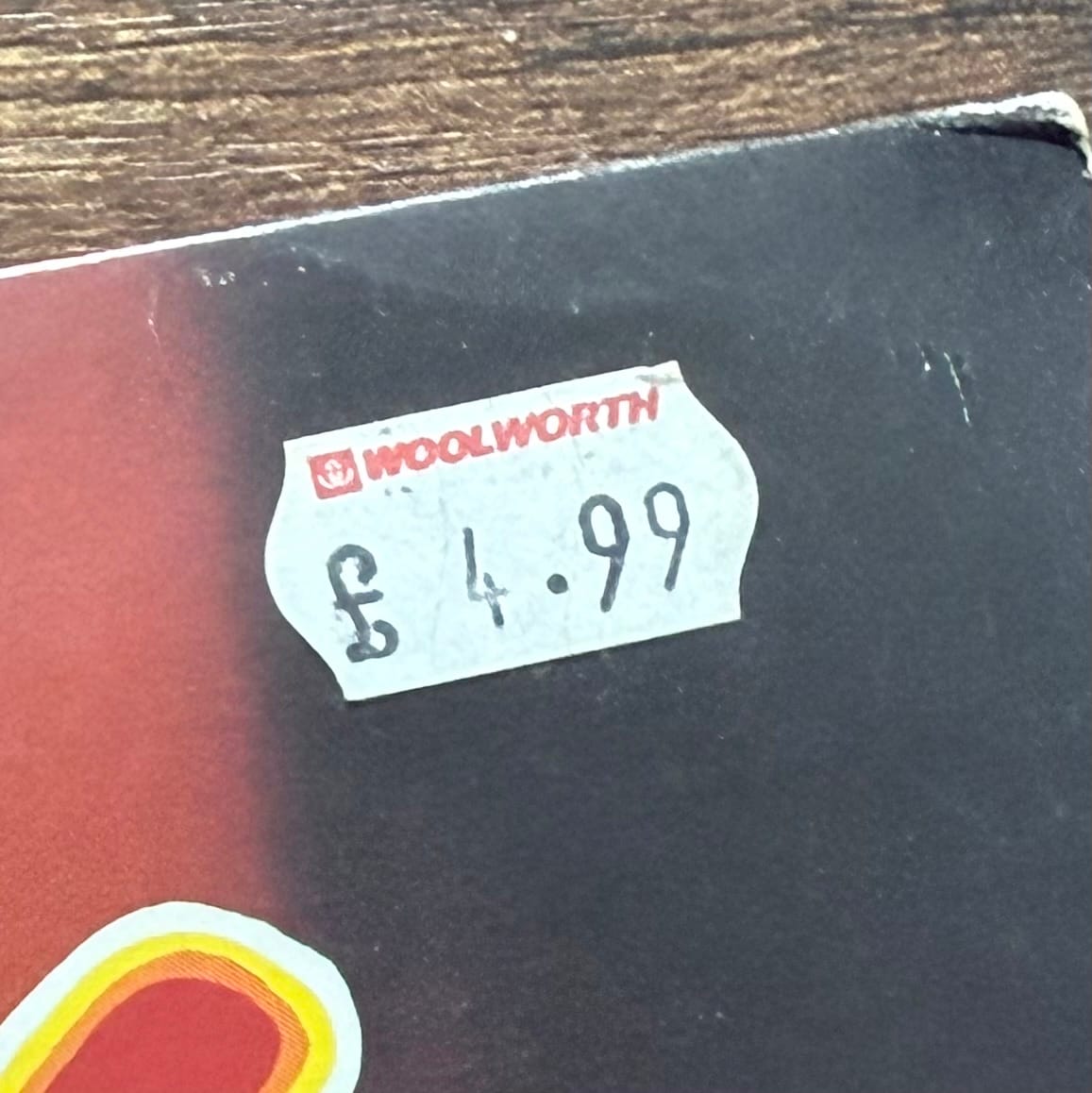
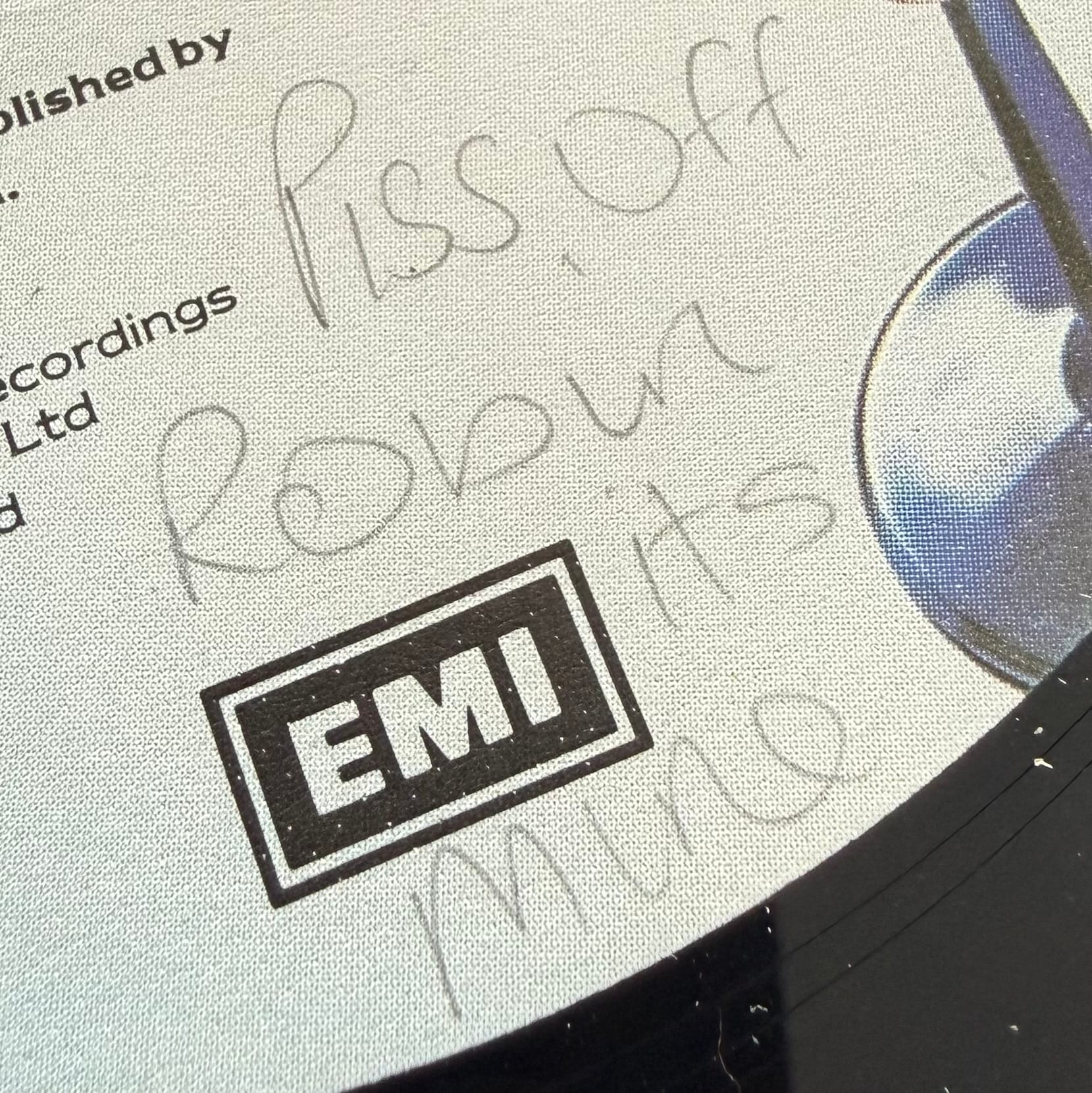
A shop price sticker and handwriting on the labels, both common on preowned vinyl. Notes to mates, like the one shown, are much rarer!
What to check in person
- Light: tilt the disc and look across the surface. Deep scratches catch the light. Fine swirl marks are normal.
- Label: writing, water damage or heavy staining can mean poor storage.
- Sleeve: a tatty sleeve doesn’t mean a bad record. A pristine sleeve with a rough disc may mean the disc was swapped.
- Pressing info: matrix numbers etched in the dead wax help identify which pressing you have (more on that below).
- Smell: a musty or damp smell points to poor storage. Mould can be cleaned, but it’s a warning sign.
First pressings vs reissues
Early pressings, especially from the 60s and 70s, are prized for their cuts and vinyl, and they carry a premium. But many modern reissues are mastered carefully on 180g vinyl, and for a new collector a well-graded reissue is often the smarter buy.
Reading the dead wax
Two copies of the same album can look identical and still be different pressings, with different sound and a very different value. I see this a lot when people come into the shop to sell records. They’ve seen a copy go for a high price and assume theirs is worth the same. Sadly it isn’t, because the pressing details can make a massive difference, and that makes for an awkward conversation! The quickest way to tell pressings apart is a string of tiny characters most people never look at.
Where to look. Tilt the record under a good light and look at the smooth, blank band between the end of the music and the label. This is the dead wax, also called the run-out groove. The matrix number is etched or stamped into it, and a magnifying glass, or a phone camera with the light at an angle, helps a lot.
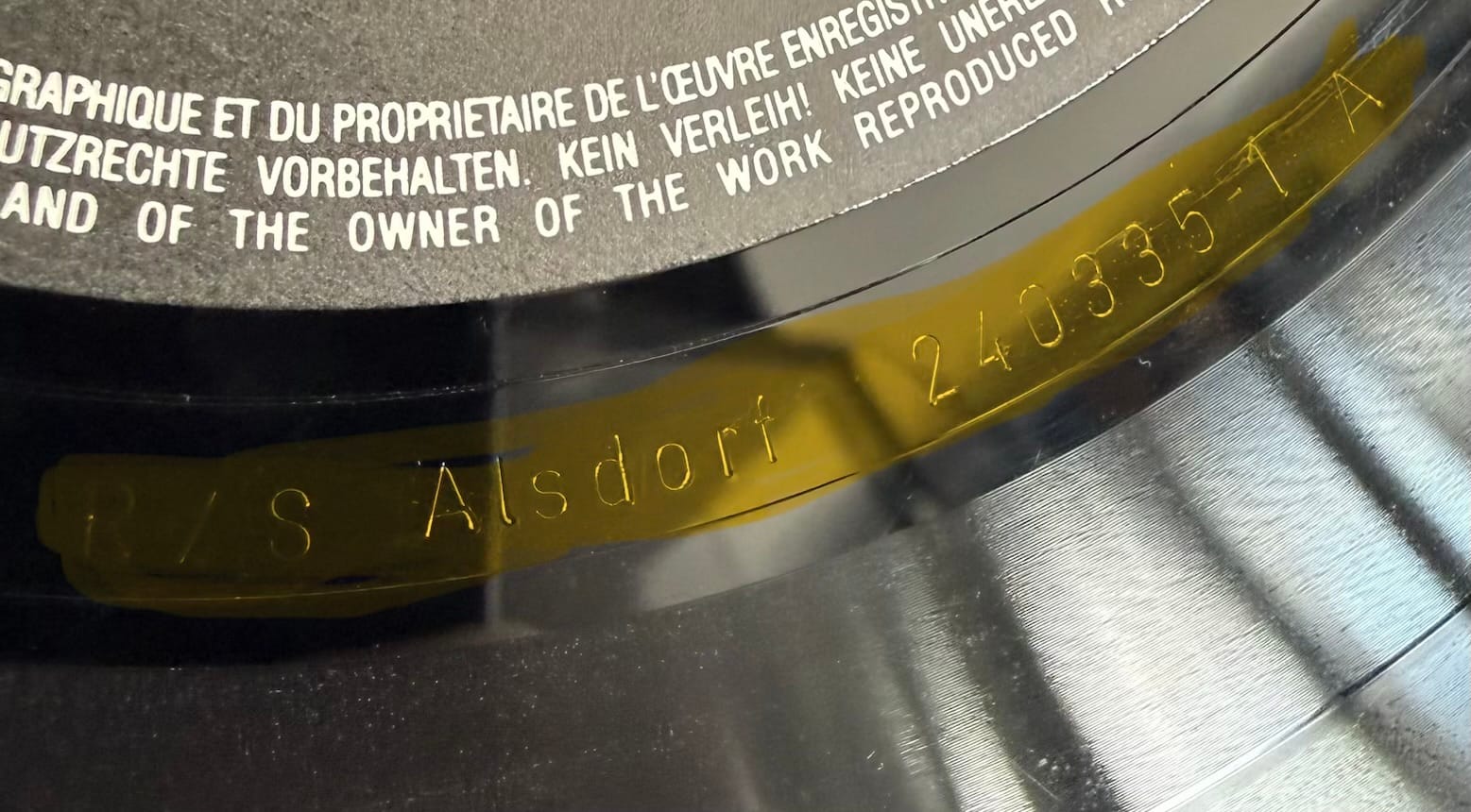
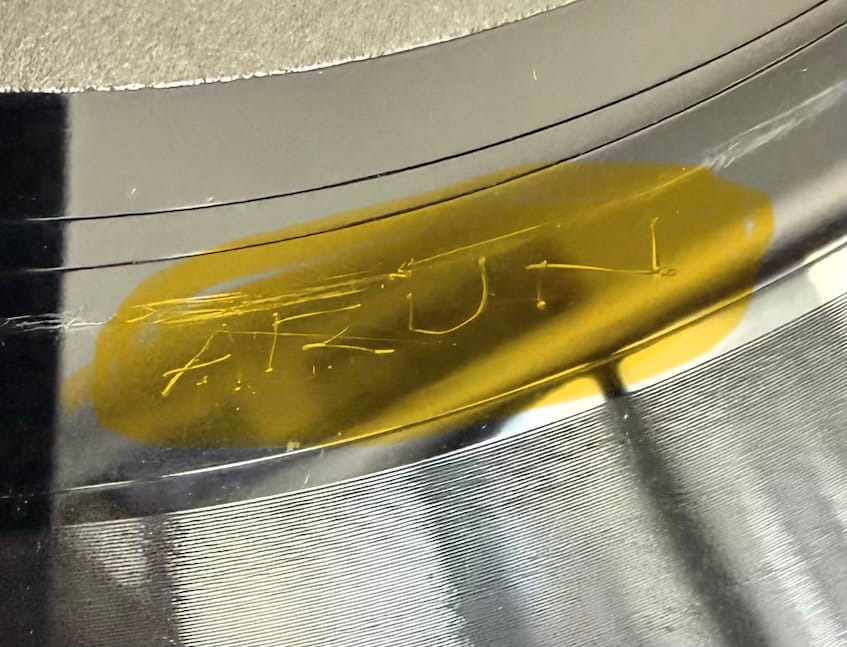
I’ve highlighted the matrix number and pressing identifier in these two photos. They’re from a West German pressing, and the R/S Alsdorf mark is a good indicator of that.
What it is. Records are pressed from metal stampers made from a lacquer disc that the mastering engineer cuts from the master tape. The matrix number is scratched or stamped into that lacquer, so it carries through to every record pressed from it. It’s usually a mix of letters and numbers, often close to the catalogue number, with a side marking (A/B or 1/2) and a suffix. Some pressings have separate stamper codes as well.
What you might see
- Catalogue-style code: often similar to the number on the label, but not always. It’s not the same as the (usually bigger) catalogue number printed on the label.
- Side marking: shows which side the code belongs to.
- Suffix letters or numbers: usually the cut number, so “-1” is often an earlier cut than “-4”. It isn’t a guarantee, though, and some letters identify the engineer instead.
- Initials or signatures: some mastering engineers and plants left their mark by hand. George Peckham signed many of his cuts “Porky” or “A Porky Prime Cut”.
- Stamped vs hand-etched: machine-stamped characters are uniform. Hand-etched ones are scratchier and individual.
What it can tell you. Whether you have an original pressing, a later reissue or a different plant’s version. Combined with the label design, sleeve details and catalogue number, it narrows the pressing down very precisely. One caution: a cut number of 1 on its own doesn’t prove a first pressing, so use it alongside the other details.
Matching it up. Discogs is the easiest place to start. Type what you see into its search, which covers matrix numbers, or use Advanced Search to look at the matrix/runout field. Then compare label, sleeve and other details against the listed releases. Collector forums can help too.
Cleaning
Even a VG+ benefits from a clean before its first play. A carbon fibre brush before every play is the minimum. A wet clean or record cleaning machine will shift embedded grime, though it won’t remove scratches.
Building a collection
- Start with what you love, not what you think you should own.
- Set a budget per record early on.
- Pick a genre or era first. Depth is more satisfying than breadth at the start.
- Charity shops and car boot sales are great, but sellers are often optimistic about condition, so check the disc yourself.
- Buy from sellers who grade honestly.
- Aim for the higher grades, budget permitting, but remember condition is only one factor in the price, alongside the pressing and the matrix number.
Based on posts first published on DD Music Geek, updated October 2026.
Further reading:
- Discogs: How To Browse & Search In The Database
- Wikipedia: Dead wax / matrix number
- Secrets from the dead-wax
- Your Sound Matters: Vinyl run-out groove messages
- Discogs: How To Grade Items
From the shop
A few of the preowned records on the shelves right now:
Products shown above are sold through my shop, DD Music Geek, where you’ll find the full terms and conditions.